

jaytrevino6844
About jaytrevino6844
The judicial system in the United Kingdom relies on a wide range of staff to ensure that legal proceedings run smoothly and efficiently.
The Norman invasion of England in 1066 brought significant changes to the judicial system. The Normans introduced a more centralized form of government and legal system, and courts became more formalized. The most significant change was the creation of the King’s Court, or the Curia Regis, which was a royal court responsible for handling more serious disputes. This court marked the beginning of the English legal system as we know it today, with the king or his representatives overseeing the administration of justice across the land.
Whether in civil law, criminal law, constitutional issues, or human rights cases, the decisions handed down by British courts are not just about resolving individual disputes—they are about building and maintaining a legal system that serves justice, democracy, and the public good.
In conclusion, law court accidents in the UK are a persistent issue that deserves more attention. While courts are primarily places of law and order, they are also physical spaces that must adhere to health and safety standards like any other public facility. Whether through slip hazards, poor infrastructure, or negligence in maintenance, these accidents can have serious legal and financial consequences.
In R (Miller) v The Prime Minister (2019), the Supreme Court found that Prime Minister Boris Johnson’s advice to the Queen to prorogue Parliament was unlawful, stating that such a move had an extreme effect on the functioning of democracy. This was a landmark ruling reinforcing the principle that no one, not even the Prime Minister, is above the law.
Should you adored this informative article in addition to you want to obtain guidance about Personal Injury Lead Generation CO generously stop by our own website. The High Court of Justice deals with serious civil matters and is divided into three divisions: the Queen’s (or King’s) Bench Division, the Chancery Division, and the Family Division. Decisions made in the High Court are binding on lower courts and may be appealed to the Court of Appeal.
Below the Supreme Court is the Court of Appeal, which is divided into two divisions: the Civil Division and the Criminal Division. The Court of Appeal hears appeals from the High Court, Crown Court, and certain tribunals. Its judgments often resolve complex points of law and are followed by lower courts.
Ultimately, law courts staff in the UK provide an essential service to the judicial system, ensuring that the wheels of justice turn smoothly. Their work behind the scenes is often overlooked, but it is crucial to the efficient and fair administration of justice. Without the dedicated work of these professionals, the court system would struggle to function, and delays and inefficiencies would undermine public confidence in the justice system. By performing their duties with professionalism and dedication, law courts staff in the UK help maintain a fair, transparent, and effective legal system.
Britain’s network of courts remains an essential part of the democratic process, ensuring that laws are applied fairly and consistently. Whether settling a contractual disagreement, overseeing a criminal trial, or interpreting legislative intent, UK courts uphold the rule of law and maintain public confidence in the legal system.
Magistrates courts are responsible for handling less serious criminal cases, such as minor criminal offences, civil disputes, and family matters. These courts are the most numerous in the UK, and their administration is often handled at the local level by administrative staff who ensure that hearings are scheduled, documents are processed, and cases are heard in a timely manner.
In the 12th century. King Henry II (reigned 1154-1189) is often credited with establishing the framework for a unified legal system in England. He introduced reforms that expanded the reach of the royal courts and reduced the influence of local lords and barons. One of his most significant reforms was the establishment of circuit judges, who traveled the country to hear cases and ensure the uniform application of the law. This helped to create a more centralized system of justice and a more uniform legal system throughout England.
It’s not only visitors or legal professionals who are at risk—court staff, including clerks, ushers, and administrative workers, can also suffer workplace injuries. Lifting heavy files, repetitive strain from computer work, and stress-related illnesses are among the common occupational hazards reported. The Ministry of Justice, as the employer, is legally required to provide a safe working environment, and failure to do so can result in compensation claims and public accountability.
The late 20th century and beyond, the UK legal system continued to evolve. The Human Rights Act 1998 incorporated the European Convention on Human Rights into UK law, providing greater protection for individual rights. The rise of the internet and digital technology also impacted the legal system, with courts increasingly adopting electronic case management systems and holding hearings via video conferencing.
The Court of Appeal in the UK hears appeals from lower courts, ensuring consistency and fairness in legal judgments. The administrative side of the Court of Appeal requires effective coordination of appeal cases, which often involve intricate legal arguments and detailed procedural requirements. The Court of Appeal is primarily staffed by appellate judges who specialize in interpreting the law and hearing appeals from both civil and criminal cases.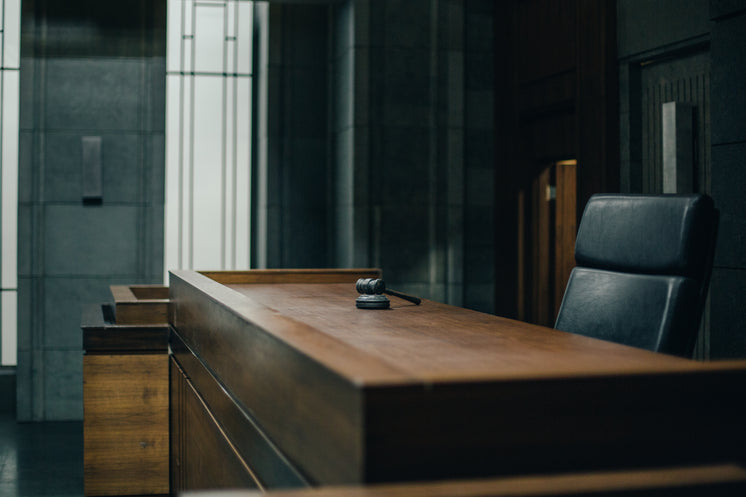
No listing found.