viko IT ltd
About viko IT ltd
Taking the Leap: How to Enjoy a Geometry Dash “Geometry Jump” (Without Overthinking It)
Introduction
There’s a special kind of excitement that comes from a “geometry jump”—the moment you tap, the moment the shape lifts off, and suddenly you’re riding a rhythm you can’t fully explain but can absolutely feel. It’s the same thrill you get in platformers, but with a twist: the movement is sharply tied to timing, patterns, and sound cues.
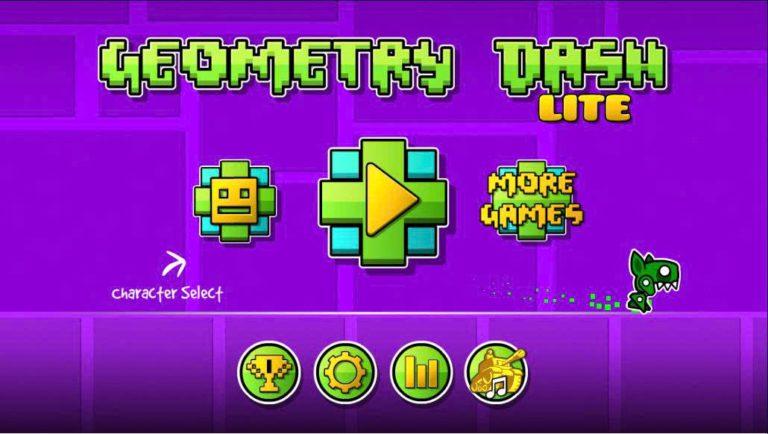
A great example is Geometry Dash, a game where you guide a cube, ship, or ball through short bursts of action that can feel both simple and surprisingly deep. If you’re new, you might worry that you’re “not good enough.” If you’re experienced, you might still forget to enjoy the process. This article is for either situation. The goal is to help you experience the jump—focus on the fun, learn the rhythm, and gradually build control.
Gameplay: What the “Jump” Really Feels Like
In Geometry Dash, the “geometry jump” happens when your input lines up with the game’s timing. Most levels teach you through repetition: a spike here, a gap there, a slope that demands a quick correction. Your job is to respond, not to predict perfectly.
1) Start with simple sections
If you want the experience rather than frustration, begin with easier levels or practice runs. Look for levels where obstacles are spaced in a way that lets you understand cause and effect. When you press at the right moment, you don’t just survive—you “catch” the beat and see how the challenge unfolds.
2) Read the rhythm
The most friendly way to approach Geometry Dash is to stop thinking of it as purely visual timing. The game uses music as a guide. Even if you don’t recognize the song, you can learn how the jumps relate to beats and transitions: the moment the sound shifts, the movement often needs to shift too.
Try this while playing: when you miss, don’t just replay and hope. Instead, listen to the part you failed and notice what changed right before the mistake. Over time, you’ll build an internal sense for when to tap.
3) Learn each “movement personality”
Geometry Dash is interesting because different modes feel like different instruments.
- Cube sections often feel like clean, direct timing. The “jump” is a quick decision followed by trust in the arc.
- Ship sections reward smooth inputs rather than frantic reactions. You’re steering through a corridor of danger, and the best runs often look calm in hindsight.
- Ball sections are about angles and patience. The momentum is continuous, so you can’t always brute-force your way out—your positioning matters.
You’ll find yourself enjoying the contrast: one moment is like crisp taps, another is like controlled drifting.
4) Experience the mini-victories
Even if you can’t finish a level yet, you can still experience real progress. You might clear a tricky obstacle you couldn’t clear yesterday. Or you might only fail one section later than before. Those wins are part of the geometry jump experience. The game is short bursts of effort, and the “fun” comes from accumulating small moments of confidence.
Tips: How to Get More Enjoyment Out of Practice
Practice can turn into a grind if you only chase results. Instead, try these approaches to keep the geometry jump feeling playful.
1) Adjust your goal per run
Don’t always aim for the full level. Aim for something smaller, like “make it past the first spike pattern” or “hit the ship section without overcorrecting.” When your goal is reachable, you get more chances to feel flow.
2) Practice the “failure point,” not the whole level
When you keep dying at the same place, treat that section like a mini-level. Replaying from the start is useful for warming up, but too much repetition can blur your learning. Spend your energy on the last 10–20 seconds before the crash. You’ll often improve faster because your brain is drilling one exact problem.
3) Use the music as your metronome
If you struggle with timing, pause your expectations about visuals alone. Instead, count quietly along with the beat (even if you’re not musically trained). When you tap at consistent points in the rhythm, your reaction becomes stable. That stability is what turns random attempts into skill.
4) Don’t “fight” your momentum
A common mistake for new players is to spam inputs when they feel nervous. Sometimes the best move is the one you commit to. If your timing is off, adjust one step—then give yourself room to see what that adjustment does. In many geometry jumps, small corrections beat big panicked changes.
5) Make peace with mistakes
A fun mindset matters more than you’d expect. Every failure teaches your timing, even when it doesn’t feel obvious. If you miss, ask: “Was I late, early, or just inconsistent?” This turns disappointment into information, which makes practice more enjoyable.
6) Explore different levels for different moods
Not every level has to be a “hardcore test.” Try:
- levels that are fast and snappy if you like quick reactions
- levels that are musical and predictable if you like patterns
- levels with smooth visuals if you enjoy reading movement cues
Variety keeps you curious. Curiosity keeps you playing long enough to actually improve.
Conclusion
A geometry jump is more than surviving obstacles—it’s learning how rhythm, timing, and movement connect. In Geometry Dash, the best part is that every attempt can be satisfying, even before you master anything. Start small, listen to the beat, focus on the section that trips you up, and treat progress like a series of mini-victories rather than one final score.
If you want a clean place to explore, practice, and dive into the world of that satisfying tap-to-lift feeling, you can check out the game at Geometry Dash. But regardless of where you play, remember the real point: the jump is meant to be experienced. Keep it friendly, keep it rhythmic, and let the level teach you one moment at a time.